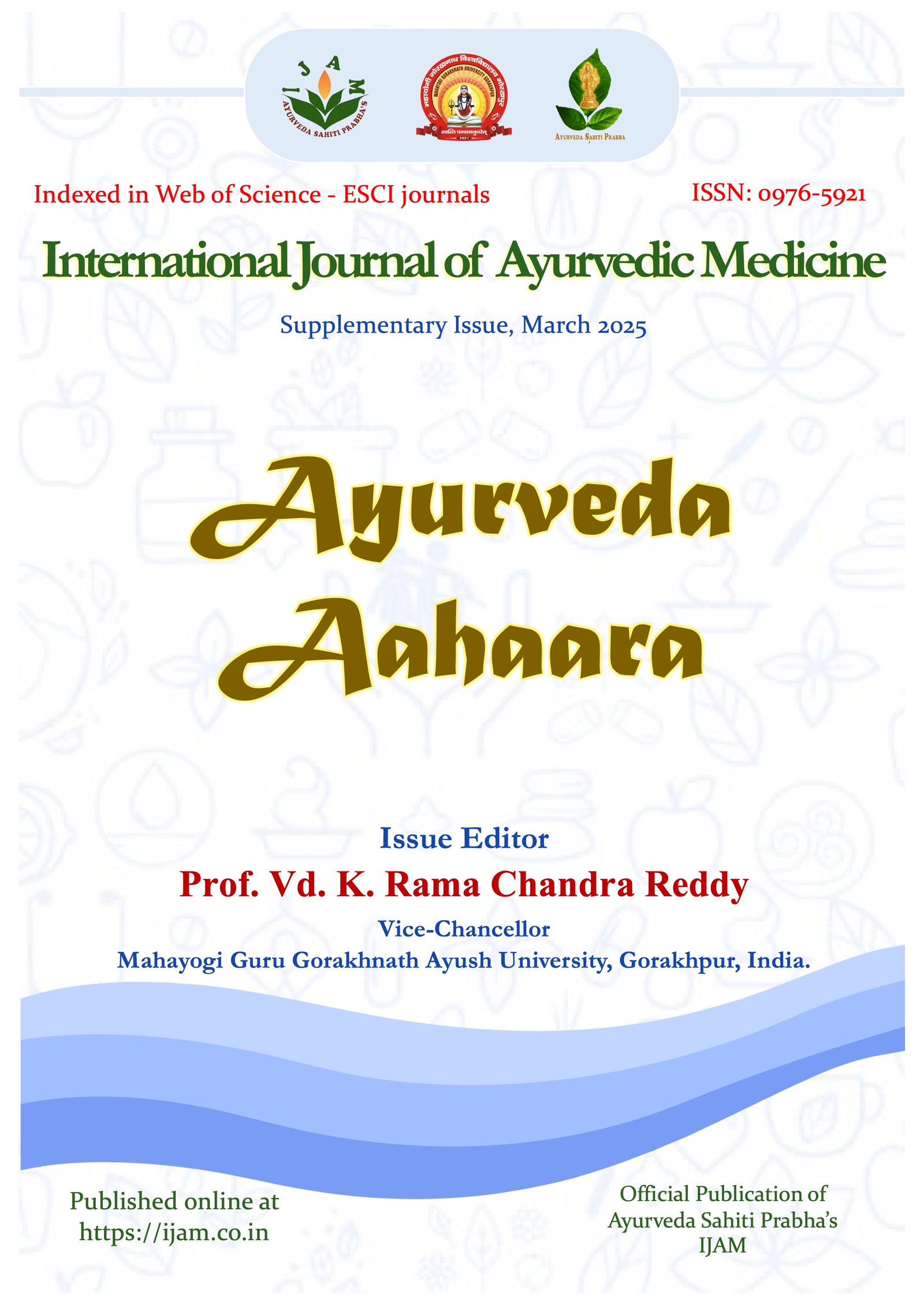
Popular Millets-Based Recipes: Nutritional and Therapeutic Perspectives
DOI:
https://doi.org/10.47552/ijam.v17i1S.7207Keywords:
Millets, Nutritional benefit, Traditional recipes, Ayurveda, Iron deficiency anemia, Diabetes, Obesity, Glycemic indexAbstract
This review article explores the nutritional and therapeutic potential of millet-based recipes, emphasizing their relevance in both traditional Ayurveda and modern dietary practices. Millets, small-seeded cereals including ragi, bajra, and little millet, are highlighted for their richness in fiber, minerals, and phytochemicals, making them suitable for managing iron deficiency anemia, diabetes, and obesity. The article presents detailed preparation methods for recipes such as Ragi Laddu, Bajra Laddu, Little Millet Daliya, and Finger Millet-Palm Jaggery Cookies, focusing on techniques like germination and roasting that enhance nutrient bioavailability and safety. Nutritional tables provided illustrate the carbohydrate, protein, mineral, and vitamin profiles of various grains, alongside their glycemic indices. The discussion underscores the value of millet integration into mainstream diets for combating malnutrition and non-communicable diseases, while advocating for further innovation in ready-to-cook millet products suited to contemporary lifestyles.
Downloads
Published
How to Cite
Issue
Section
License
Copyright (c) 2026 International Journal of Ayurvedic Medicine

This work is licensed under a Creative Commons Attribution-NonCommercial-ShareAlike 4.0 International License.
The author hereby transfers, assigns, or conveys all copyright ownership to the International Journal of Ayurvedic Medicine (IJAM). By this transfer, the article becomes the property of the IJAM and may not be published elsewhere without written permission from the IJAM.
This transfer of copyright also implies transfer of rights for printed, electronic, microfilm, and facsimile publication. No royalty or other monetary compensation will be received for transferring the copyright of the article to the IJAM.
The IJAM, in turn, grants each author the right to republish the article in any book for which he or she is the author or editor, without paying royalties to the IJAM, subject to the express conditions that (a) the author notify IJAM in advance in writing of this republication and (b) a credit line attributes the original publication to IJAM.