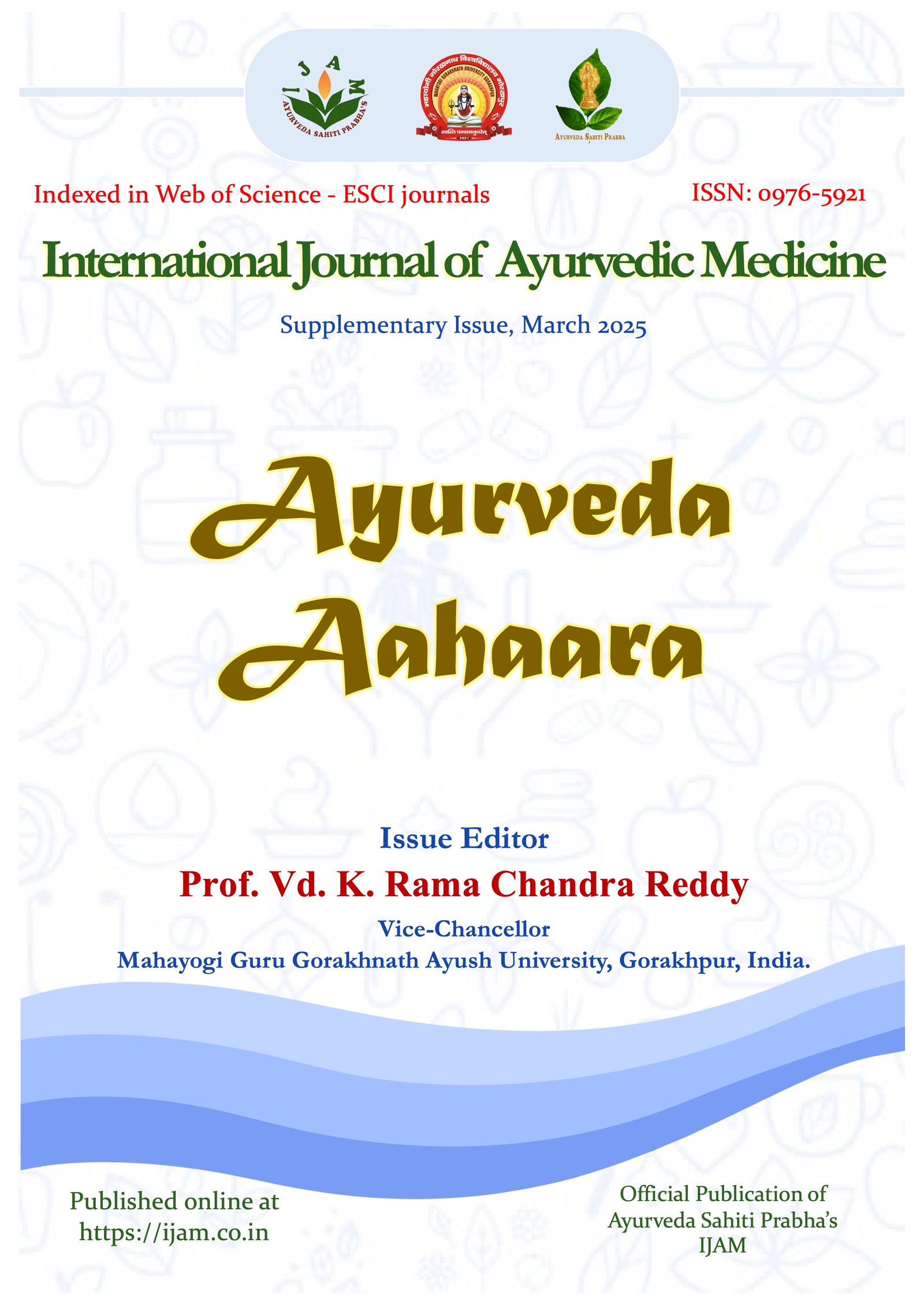
Implications of Ayurvedic Nutraceuticals as Preventive Medicine and Therapy: With Special Reference to Moringa (Moringa oleifera)
DOI:
https://doi.org/10.47552/ijam.v17i1S.7210Keywords:
Ayurveda, Diet, Nutraceuticals, Prevention, Preventive MedicineAbstract
Diet is the best medicine. Change in diet patterns globally has thrown the world into the risk of Non-Communicable Diseases (NCDs). A recent report from 2019 indicated that approximately 7.9 million deaths and 187.7 million Disability-Adjusted Life Years (DALYs) were attributable worldwide to dietary risk factors for NCDs, with DALYs being more significantly linked to these risks. This data serves as a pressing call to all governments throughout the world to take necessary steps to develop healthy communities. The convergence of Food Science, Pharmaceuticals, and Preventive Medicine is encouraging a return to a natural food-based lifestyle. Modern dietary shifts, characterized by the consumption of junk food and low-fibre diets, have led to widespread nutritional deficiency states, further leading to disease. The term Nutraceutical was coined in 1989 by Dr. Stephen DeFelice, a portmanteau combining the words Nutrition and Pharmaceutical. It is defined as any substance, be it a food or a part of food, that provides medicinal and health benefits, including the prevention and further treatment of a disease. Food products that provide health benefits and aid in reducing the risk of chronic disease, apart from their basic nutritional value, may also be covered under this term. Globally, the nutraceutical market is experiencing fast growth, valued at $74.7 billion in 2020. This review is therefore aimed to discuss the basic concept of herbal nutraceuticals, their role in health and in disease states, with special reference to Moringa oleifera.
Downloads
Published
How to Cite
Issue
Section
License
Copyright (c) 2026 International Journal of Ayurvedic Medicine

This work is licensed under a Creative Commons Attribution-NonCommercial-ShareAlike 4.0 International License.
The author hereby transfers, assigns, or conveys all copyright ownership to the International Journal of Ayurvedic Medicine (IJAM). By this transfer, the article becomes the property of the IJAM and may not be published elsewhere without written permission from the IJAM.
This transfer of copyright also implies transfer of rights for printed, electronic, microfilm, and facsimile publication. No royalty or other monetary compensation will be received for transferring the copyright of the article to the IJAM.
The IJAM, in turn, grants each author the right to republish the article in any book for which he or she is the author or editor, without paying royalties to the IJAM, subject to the express conditions that (a) the author notify IJAM in advance in writing of this republication and (b) a credit line attributes the original publication to IJAM.